← Back to projects / AirTOP Integration
Operational integration utility PUBLIC PORTFOLIO VIEW

AirTOP Integration

ATS Log-to-AirTOP Engine

A governed workflow that transforms authorised ATS records into validated AirTOP flight plans while preserving specialist control and traceability.
ROLE Solution design, AirTOP integration and specialist workflow engineering
DELIVERY MODEL Specialist-governed · Human-reviewed
AirTOP API Java Swing ATS Logs CSV Data Validation
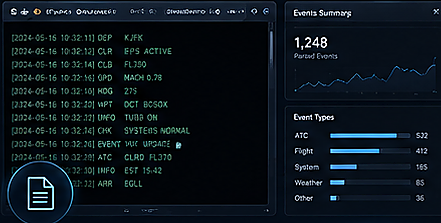
ATS Log-to-AirTOP Engine public interface preview
CAPABILITY PREVIEW Public-safe interface representation
Privacy and confidentiality protected

Public portfolio summary. Operational records, organisation-specific identifiers, source schemas, credentials and proprietary implementation rules are intentionally excluded.

01

PROJECT OVERVIEW

From operational need to controlled delivery

A

THE CHALLENGE

Operational need

Preparing large volumes of flight-plan information manually creates repetitive work, inconsistent interpretation, duplicate records and avoidable model-preparation delays.

B

ENGINEERED RESPONSE

Solution approach

A Java-based AirTOP integration utility parses authorised records, validates aircraft, route, level and timing information, manages duplicate logic and presents a specialist review workflow before import.

C

VALUE CREATED

Operational impact

Reduces repetitive preparation effort, improves consistency, makes exceptions visible before import and creates a repeatable path to simulation-ready traffic.

02

CONTROLLED WORKFLOW

A clear specialist-led path from source to result

01

Source records

Authorised ATS log or flight-plan data

02

Parse & normalise

Standardise fields, time formats and route tokens

03

Validate & enrich

Apply quality, chronology and model-readiness checks

04

Specialist review

Preview exceptions before any model change

05

Controlled import

Create approved AirTOP flight-plan objects

06

Results & audit

Summaries, exceptions and traceable outcomes

03

DEVELOPED CAPABILITIES

Complete public-safe feature inventory

The list below describes the developed capability without exposing operational records, source-system credentials, private mappings or proprietary implementation details.

01

ATS data intake and parsing

Transforms mixed operational records into a consistent reviewable structure.

  • Loads authorised ATS log and flight-plan source files.
  • Recognises arrival, departure, local and overflight movement patterns.
  • Extracts callsign, aircraft, aerodrome, date, time, speed, level and route information.
  • Normalises inconsistent field formats and whitespace before validation.
  • Handles operating-day boundaries and midnight-crossing records.
  • Preserves the source reference needed for review and traceability.
02

Validation and exception control

Makes incomplete or unsafe records visible before import.

  • Checks mandatory identifiers, movement times and airport relationships.
  • Flags duplicate and near-duplicate records using configurable rules.
  • Validates chronology, simulation-day assignment and time consistency.
  • Checks aircraft-type availability and performance compatibility.
  • Reviews requested level against configured aircraft capability.
  • Highlights missing, conflicting or unresolved values in the specialist grid.
03

Routing and waypoint intelligence

Builds usable model routing without hiding data-quality gaps.

  • Interprets route tokens and prepares ordered waypoint sequences.
  • Matches available procedures and routing objects already present in the model.
  • Supports arrival, departure and overflight entry-point logic.
  • Handles incomplete routes through controlled fallback options.
  • Supports single-point and minimal-route cases where model rules require assistance.
  • Keeps unresolved route conditions visible for specialist approval.
04

Specialist review workflow

Keeps the analyst in control of every import decision.

  • Provides a sortable, filterable preview table before import.
  • Uses visual status indicators for valid, warning and error conditions.
  • Allows duplicate retention or suppression through an explicit option.
  • Supports controlled inactive-on-error handling where appropriate.
  • Displays progress, processed counts, skipped records and failures.
  • Exports a review log for quality assurance and follow-up.
05

AirTOP object creation

Converts approved records into simulation-ready model content.

  • Creates approved AirTOP flight-plan records with mapped movement attributes.
  • Assigns the correct model day and operational reference time.
  • Links aircraft type, routing and waypoint information when available.
  • Applies controlled fallbacks rather than silently discarding valid traffic.
  • Separates created, skipped, warning and failed outcomes.
  • Leaves a clear import result that can be reviewed after processing.
06

Governance and maintainability

Designed for repeatable use in a specialist operational workflow.

  • Uses explicit configuration rather than hidden assumptions.
  • Keeps processing rules separated from the user-interface layer.
  • Supports reusable mappings and controlled model-specific settings.
  • Avoids exposing operational records or credentials in public reporting.
  • Preserves human approval before model changes are committed.
  • Supports future extension without replacing the core review process.
04

SOLUTION ARCHITECTURE

High-level design without sensitive implementation exposure

01

Authorised data source

ATS logs or approved flight-plan extracts

02

Java processing layer

Parsing, normalisation, validation and mapping

03

Specialist desktop review

Preview, filters, warnings and approval controls

04

AirTOP integration layer

Controlled creation of model objects

05

Review output

Import summary, exceptions and audit-ready log

05

CAPABILITY EVIDENCE

Designed outcomes

Reduced repetitive flight-plan preparation effort.

Improved consistency between source data and model content.

Earlier visibility of routing, aircraft and timing exceptions.

Repeatable specialist-governed import process.

Traceable results without exposing operational source data.